What Every Cocktail Fan Should Try at a Gin Bar NYC
New York has always rewarded drinkers who pay attention. A crowded room in the East Village, a narrow back bar in Midtown, a polished hotel lounge in Tribeca, each can pour a very different idea of what gin should taste like. That is what makes a night at a Gin Bar NYC experience worth seeking out. You are not just ordering a spirit with juniper in the background. You are stepping into a category with more range than many people realize, from brisk London dry styles to floral modern expressions, from navy strength bottlings that hit with real authority to softer gins built around citrus, herbs, or tea.
For cocktail fans, that variety matters. Gin changes shape depending on the drink. In a Martini, it stands exposed. In a Negroni, it needs enough backbone to stay visible against Campari and vermouth. In a Collins or a Rickey, the botanicals can feel almost sparkling, even before the soda lands. A good gin bar understands those distinctions and builds a menu that proves it. The best ones in New York also know when to leave the classics alone and when to give them a city-specific twist.
If you usually think of whiskey bars as serious and gin bars as lighthearted, a strong gin program will change your mind quickly. Gin can be exacting. It asks more from the bartender and more from the guest. Two bottles that look similar on the shelf may behave very differently in the glass. The payoff is that when a drink is made with care, the result can be sharper, more aromatic, and more memorable than almost anything else on the menu.
Start with the drink that reveals everything
If you want to know whether a gin bar is worth your time, order a Martini early. It is the cleanest test of judgment behind the stick. A bartender making a great Martini needs to choose the right gin, temperature, dilution, and vermouth balance, then hit all four without fuss. There is nowhere to hide.
At a serious gin bar, the first question should not be vodka or gin, but which gin. That is a promising sign. A classic London dry gives you structure, snap, and the piney clarity many Martini drinkers chase. A more contemporary gin might bring grapefruit peel, lavender, cucumber, or green herbs, which can make the drink feel softer and more perfumed. Neither is automatically better. The right choice depends on whether you want the Martini to taste steely, savory, citrusy, or floral.
The vermouth matters just as much. In lesser bars, vermouth is often treated like an afterthought. In good ones, it is fresh, refrigerated, and selected for a reason. A lean, mineral dry vermouth will keep the drink taut. A more aromatic vermouth can round off the edges and widen the finish. If the bartender offers a 50-50 Martini without being asked, pay attention. That often signals confidence rather than compromise. A well-made 50-50 has precision, fragrance, and enough alcohol to satisfy without flattening your palate in the first ten minutes.
Dirty Martinis deserve a quick word, because they divide rooms fast. At a gin-focused bar, a dirty order can be excellent if the brine is restrained and the gin is robust enough to remain recognizable. When the olive juice takes over completely, you lose what makes gin interesting in the first place. If you want savory rather than murky, ask for just a touch of brine and see what the bartender recommends.
The five drinks that show a gin bar at its best
Not every cocktail fan wants to spend the whole night in Martini territory. Fair enough. Gin plays beautifully across styles, and a smart bar program should show that range. If you want a reliable roadmap, these are the five orders that tell you the most.
-
Martini
This is the benchmark. It tests gin selection, dilution, glassware, and vermouth handling. Order one if you want to understand the bar’s priorities in a single glass. -
Negroni
The Negroni shows whether the gin can stand up to bitterness and sweetness without disappearing. A good version feels integrated, not sugary, not flat, not overbuilt with gimmicks. -
Tom Collins
This classic is often underrated because it looks simple. In reality, it reveals the bar’s sense of freshness and balance. With proper citrus and lively soda, it should feel bright, brisk, and almost dangerously easy to drink. -
Gimlet
A real Gimlet should be tart, cold, and direct. At a quality gin bar, you may see versions that use fresh lime and simple syrup rather than bottled cordial, or a split approach that nods to both traditions. Either can work if the drink stays tight and purposeful. -
French 75
This is where gin meets celebration. Done well, it is lifted by sparkling wine rather than buried under it. Done poorly, it becomes anonymous and sweet. The difference comes down to acid, restraint, and the bartender’s hand with bubbles.
Those five drinks cover most of the territory a cocktail fan should care about. They also reveal how a bar thinks. Some places excel at stern classics. Others shine when the drinks get longer, colder, and more sparkling. Either can be compelling if the choices are deliberate.
Why the Negroni deserves more respect than it gets
In New York, the Negroni is so common that many people stop tasting it critically. That is a mistake. At a Gin Bar NYC regulars respect, the Negroni is rarely just a default aperitivo. It is a balancing act with very little margin for sloppiness.
Gin has to fight for air in this drink. Campari brings bitterness and orange peel, sweet vermouth brings spice, fruit, and sugar, and if either one is poured too generously, the gin vanishes. That is why bottle choice matters more than many guests expect. A crisp, juniper-led London dry can cut a neat line through the center. A softer, contemporary gin can make the drink more fragrant, but only if it still has enough structure to stay audible.
The best Negronis also take temperature seriously. I have had versions in busy bars where a warm glass and lazy stirring left the drink sticky and blunt by the second sip. The good ones arrive cold, properly diluted, and expressive from the first taste. Large, solid ice helps, but so does the bartender’s restraint. You do not need smoked rosemary, a dehydrated orange wheel the size of a coaster, and three extra tinctures to make a Negroni feel special. Often the most persuasive version is the plainest.
If you see a white Negroni on the menu, it is worth considering. It swaps the familiar red bitterness of Campari and sweet vermouth for lighter, often more alpine elements, usually with gentian-based bitterness and a fortified wine or aperitif that leans floral or herbal. The drink becomes brighter, more angular, and sometimes more revealing of the gin itself. Not everyone prefers it, but it is one of the clearest ways to taste how a bar handles modern gin classics.
The long drinks that separate tourists from regulars
A lot of people walk into a gin bar expecting spirit-forward drinks and overlook the lengthened classics. That is a shame, especially in New York, where pace and weather often make a colder, more refreshing drink the smarter choice.
The Tom Collins, for example, is one of the most honest cocktails in the canon. It asks for very little, which means flaws show up instantly. Bad citrus tastes tired. Dead soda flattens the whole drink. Too much sugar turns refreshment into syrup. But when a bar gets it right, the Collins is brilliant. It lifts gin rather than masking it, and each sip feels cleaner than the last. On a warm evening, it can outperform Gin Bar NYC drinks with twice the reputation.
The Gin Rickey deserves more love too. Historically, it is one of the driest, simplest ways to drink gin with lime and soda, and its appeal is exactly that lack of ornament. At bars where every menu description runs long, a Rickey can feel almost radical. It gives the gin room to speak. If the bartender steers you toward a bottle with strong citrus peel or peppery botanicals, listen. In a drink that minimal, those details matter.
Then there is the French 75, which many bars push into brunch territory and sweeten into submission. A proper one should not drink like sparkling lemonade. It should feel pointed, cold, and elegant, with enough acidity to keep the bubbles moving and enough gin to remind you this is still a cocktail, not just a toast.
Seasonal gin cocktails are worth ordering, but ask questions
One of the pleasures of visiting a strong gin bar is seeing how the spirit behaves with seasonal produce and kitchen ingredients. Spring menus often lean toward peas, cucumber, mint, and delicate florals. Summer brings berries, stone fruit, basil, and shiso. Fall usually moves into pear, apple, sage, and baking spice. Winter can go deep with citrus, tea, rosemary, and richer vermouths.
Seasonal drinks can be excellent, but they are also where bars sometimes lose discipline. A menu description that sounds beautiful on paper can arrive tasting vague if too many ingredients are pulling in different directions. Gin is aromatic, but it is not infinitely elastic. Pile on enough modifiers and you erase the very spirit the bar is supposed to celebrate.
The fix is simple. Ask what gin is in the drink and why. A bartender who can answer clearly probably knows what they are doing. Maybe the menu cocktail uses a softer gin because the drink already includes bitter herbs. Maybe it uses a high-proof bottle to stand up to fruit. Maybe the garnish is there to add aroma, not because the kitchen had extra basil. Those explanations are revealing. They tell you whether the drink was built from the spirit outward or just assembled from trendy parts.
I once ordered a seasonal gin cocktail in Manhattan that sounded overcomplicated, snap pea eau de vie, lemon verbena, fino sherry, and a local gin heavy on green botanicals. On paper, it was flirting with chaos. In the glass, it worked because the bartender had kept the proportions tight and the drink dry. The gin stayed present, the pea note read as fresh rather than vegetal, and the sherry added salinity without taking over. That is the kind of judgment worth paying for.
How to order if you care about gin, not just cocktails
A good gin bar does not require secret knowledge, but a little specificity helps. Saying “something gin-based” puts a lot of pressure on the bartender to guess what you mean by refreshing, strong, herbal, bitter, or elegant. Giving a real preference gets you better results.
If you like juniper, say so. If you usually drink Martinis very cold and fairly dry, say that too. If you want a long drink with no sweetness, mention it. Bartenders are much better at steering you when you give them a shape rather than a blank canvas.
This is especially true in a city where shelves can hold dozens of gins. One bar may emphasize British classics. Another may feature New York distilleries. Another may stock Japanese, Spanish, and Australian bottles with highly distinctive botanical profiles. Those choices are exciting, but they are only useful if the conversation narrows them into something Gin Bar NYC drinkable for you.
Here are a few signs that the gin program in front of you is the real thing:
-
The bartender talks about style, not just brand names.
“Citrus-forward,” “juniper-heavy,” “navy strength,” and “soft floral finish” are more useful than a recitation of labels. -
Vermouth is handled with care.
Freshness, storage, and intent matter, especially for Martinis and other stirred drinks. -
The menu includes both classics and house drinks.
A bar that only riffs can feel insecure. A bar that only does standards may not show much imagination. -
Garnishes are restrained and purposeful.
A lemon twist that changes aroma is one thing. A decorative herb bouquet that blocks your nose is another.
That checklist sounds basic, but it predicts quality surprisingly well.
The case for trying a gin and tonic at least once
Some cocktail fans avoid the gin and tonic at serious bars because it feels too ordinary. That instinct misses the point. In a strong gin-focused room, a G and T can function like a tasting flight in disguise. The tonic brand, carbonation, garnish, and glassware all change the result, and the bar’s gin selection gives you room to tune bitterness, citrus, and perfume more precisely than most guests expect.
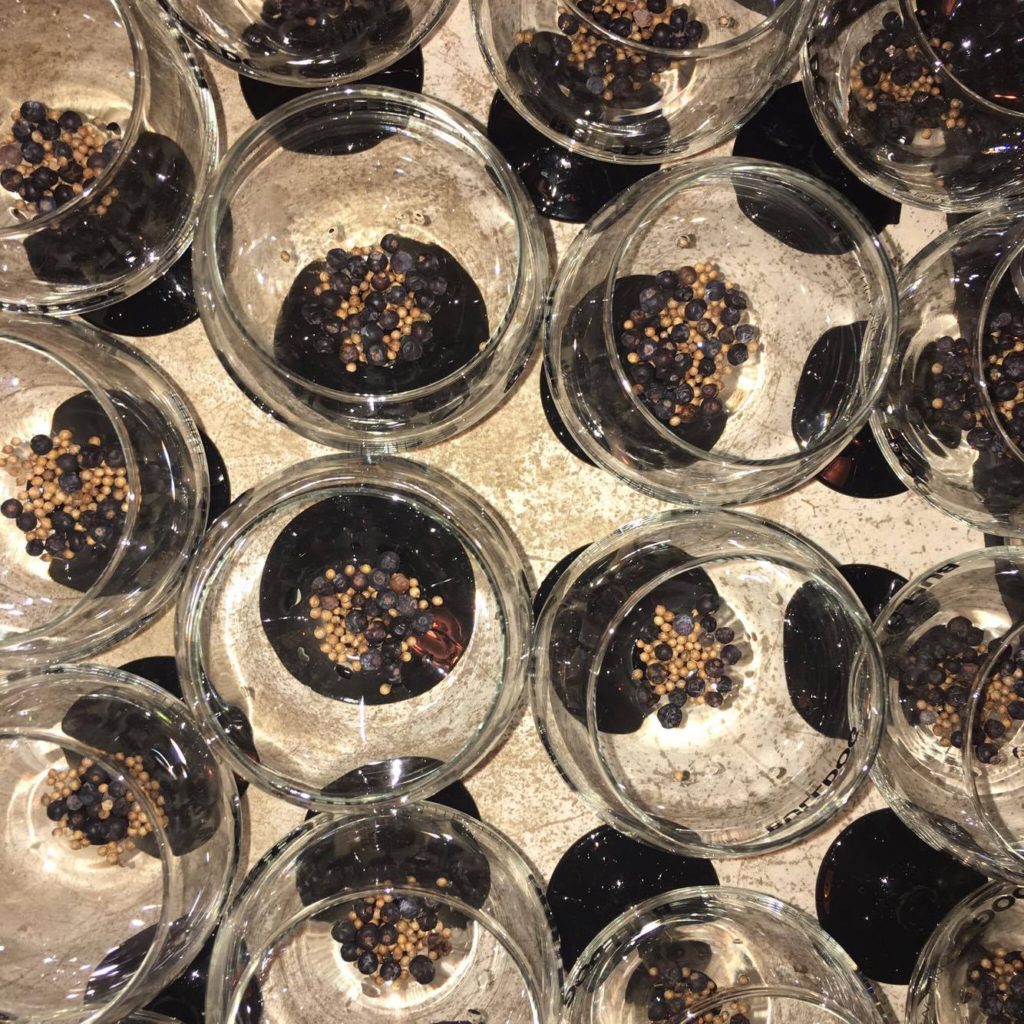
Spanish-style service, with a large balloon glass, plenty of ice, and a thoughtful garnish, has influenced many bars, though not always for the better. When handled well, the format opens up aroma and keeps dilution in check. When handled badly, it becomes garnish theater. Juniper berries, pink peppercorns, cinnamon sticks, grapefruit peels, and edible flowers all at once do not make a drink more sophisticated. They just make it crowded.
A better approach is selective. If the gin has strong coriander and lemon peel, a clean citrus garnish may be enough. If the bottling leans cucumber and rose, overloading it with extra floral notes can tip it into soap. Ask the bartender what garnish they actually think improves the drink. The answer is often more restrained than the menu photo culture would suggest.
What food does best with gin
If you plan to eat at the bar, gin gives you more pairing flexibility than darker spirits usually do. Oysters, crudo, fried seafood, herb-heavy salads, goat cheese, olives, roast chicken, and many vegetable dishes work well because gin’s botanicals can echo brine, citrus, green herbs, and light spice without overwhelming the plate.
That does not mean every pairing is effortless. Very sweet cocktails can fight with savory food, and heavily bitter drinks can flatten delicate dishes. A bone-dry Martini beside raw bar items is often perfect. A Collins can be ideal with fried snacks. A Negroni can do well before dinner, less so with subtle fish. Strong blue cheese, charcuterie, and salty bar snacks can make a dirty Martini or a Gibson feel especially sharp and satisfying.
The Gibson, incidentally, is one of the smartest orders in a real gin bar and still not ordered often enough. Swap the olive or twist for a cocktail onion and the whole drink shifts. It becomes savory in a cleaner, more architectural way. Onion brine can bully the drink if the bar is careless, but in measured hands the Gibson is one of the best proofs that Martini variations still have room to surprise experienced drinkers.
A note on price, proof, and pace
New York cocktails are expensive. There is no polite way around that. At a serious gin bar, though, price can correlate with things you actually taste: better ice, proper vermouth storage, broader gin selection, more consistent training, and enough labor time to build drinks correctly during a rush.
What matters is whether the glass earns the tariff. A top-shelf Martini made with a premium gin may cost several dollars more, but if the pour, dilution, and service are excellent, the difference can be justified. On the other hand, paying luxury pricing for a sloppy Collins with dull citrus is a fast way to lose faith in the room.
Proof should shape your ordering too. Navy strength gins can make thrilling Martinis and bold, structured classics, but they also land harder over the course of an evening. If you begin there, consider moving to a lower-proof drink later, perhaps a 50-50 Martini, a Rickey, or a carefully made spritz variation. The best nights at a gin bar are paced, not conquered.
The drinks that stay with you
What cocktail fans should try at a gin bar is not really a mystery. Start where the spirit is naked enough to judge, then move into the drinks that test balance, freshness, and range. A Martini tells you whether the bar respects fundamentals. A Negroni shows whether it understands structure. A Collins or Rickey reveals whether simplicity scares the house. A French 75 proves whether elegance and restraint still mean anything in a crowded city.
What keeps people coming back, though, is not only technical quality. It is the feeling that someone behind the bar is paying close attention, to the bottle, to the guest, to the season, to the tiny choices that turn a familiar order into a memorable one. That is where a great Gin Bar NYC destination separates itself from a place that merely stocks a lot of juniper.
If you care about cocktails, give gin more room than habit usually allows. Ask questions. Taste side by side when the bar is quiet enough for it. Order one classic you know well and one drink that sounds slightly outside your comfort zone. New York is full of bars that can teach you something in a glass. The gin-focused ones often teach it faster.
The Winslow
243 E 14th St
New York, NY 10003, United States
Phone: +1 212-777-7717
FAQ About Gin Bar NYC
How to do a gin tasting?
Start with a small pour and gently smell the gin before taking a small sip. Notice its juniper, citrus, floral or spice notes, then compare how the flavor changes with a little water or tonic. At a gin bar, ask the bartender to explain the selection and botanical pairings.
How to make the best tasting gin and tonic?
Use chilled gin, fresh tonic and plenty of ice. A common starting ratio is one part gin to two parts tonic, adjusted to taste. Choose a garnish that complements the gin's botanicals and stir gently to preserve the bubbles.
What is the smoothest tasting gin?
There is no single smoothest gin for everyone. Perceived smoothness depends on the botanical recipe, alcohol strength, serving temperature and mixer. Describe whether you prefer citrus, floral, herbal or juniper-forward flavors so a bartender can suggest a suitable style.